Instagym
From a boutique fitness studio in a crowded market to a category-of-one premium wellness brand.
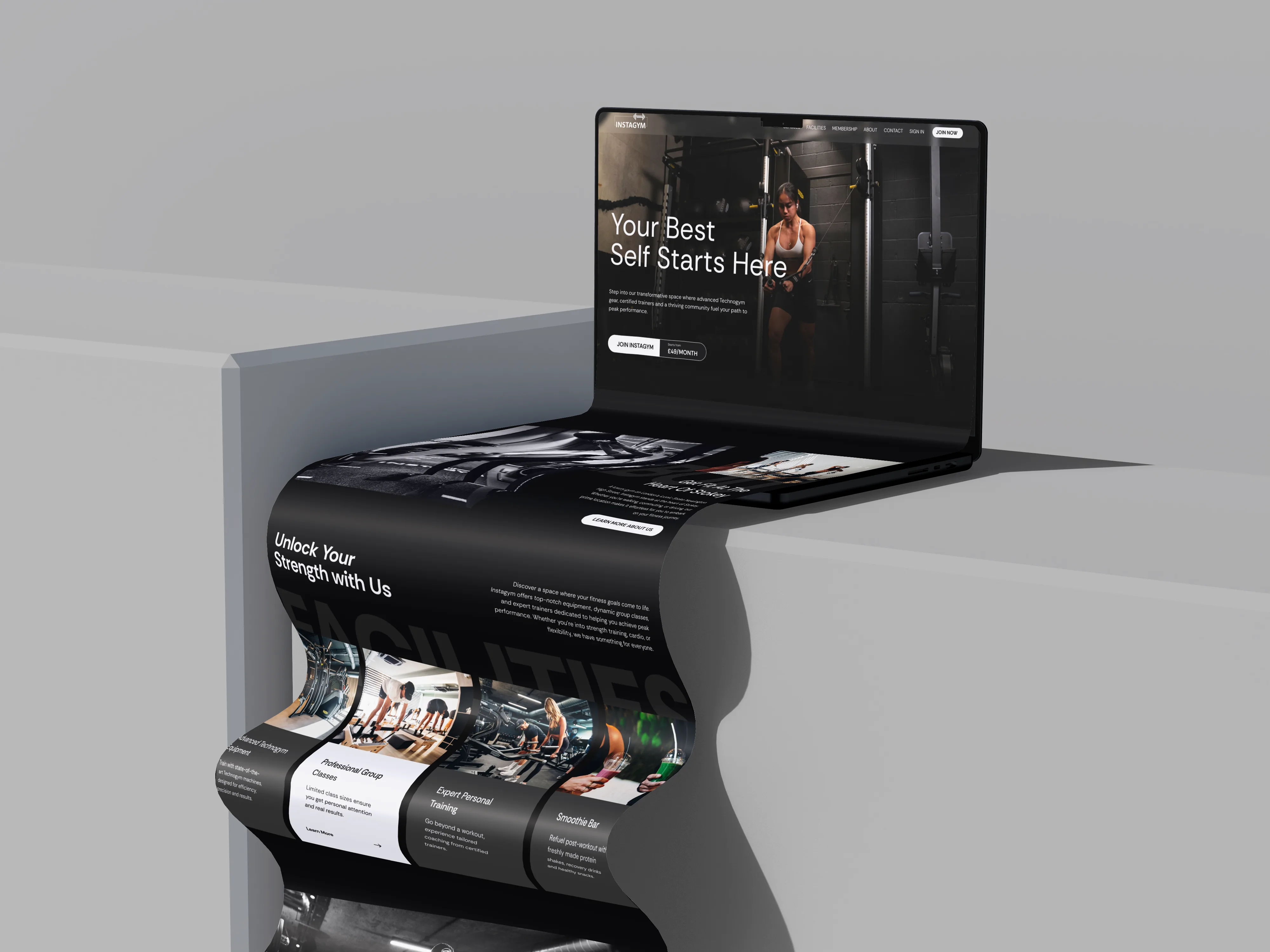
Instagym occupies a prime corner of Stoke Newington High Street. The equipment is current Technogym, refreshed in the last 18 months. The trainers are all certified, with an average of 9 years in the industry. The room itself is quieter, better-lit, and more carefully designed than most boutique studios charging twice the monthly rate. The brand, however, was selling something else. It read as a friendly local gym competing for the same prospect base as the chain operators four streets away. Members were arriving on price, and the price was holding the room down.
The brief that arrived was for a rebrand. The conversation moved within the first hour to a reposition.
Boutique fitness in London is one of the most crowded categories in the city. Within a one-mile radius of Stoke Newington Station, there are 14 operators selling some version of the same six promises. Equipment lists. Monthly rates. Class schedules. Opening hours. Instagym was making those promises too.
Everything the team was most proud of lived inside the gym. The brand mentioned none of it.
The result was predictable. A prospect walking down Stoke Newington High Street was choosing Instagym against two budget studios and a chain operator on price. A prospect who had visited once knew the gym was different. To everyone else, it did not look it.
The brand was undercapitalising on the product. The architecture, voice, and positioning all read accessible-local when the room itself was operating premium-destination. A 38% membership churn rate within the first six months told the same story from the other side. Members joining on price were leaving on price.
The repositioning moved Instagym out of the boutique fitness category and into the destination tier.
The shift sat on a single strategic decision. Boutique gyms grow by adding members. Premium fitness brands grow by limiting them. Once that line was drawn, the rest of the brand decisions resolved themselves. The "Why-join-Instagym" features grid was retired. The phrase that replaced it was "we limit membership numbers." Scarcity is not a marketing tactic in the new brand. It is the positioning. The same principle of using constraint as a positioning tool appeared in the Melody Whisky Bar engagement, where curation replaced comprehensiveness.
Every other element followed. The voice shifted from welcoming to confident. The visual register became dark editorial instead of bright stock. The membership architecture grew from one flat rate into four named tiers ranging from £99 to £399 per month. The smoothie bar and recovery offering, already operating in the building, was repositioned as a brand pillar rather than an amenity. The Blue Light Membership stayed, repositioned as a deliberate inclusion within a premium tier system, not a discount layer underneath it.
A full brand architecture, ready to operate at the new tier across 47 brand surfaces.
Strategic positioning around limited membership, personal transformation, and a curated trainer relationship. A new narrative voice carried across every surface from member onboarding to outdoor signage. A redrawn identity system, dark, editorial, and photography-led. A four-tier membership architecture, named with deliberate weight: Platinum, Gold, Silver, Off-Peak. A new digital presence rebuilt around the new brand and tier hierarchy. A member experience reframed from facility you visit to space you belong to.
The physical gym did not change. The way the brand spoke about it did.
Within six months of relaunch, Instagym had stopped appearing in the same comparison set as the budget operators on Stoke Newington High Street. The brand began registering against the central London premium destinations: ClassPass-tier studios in Mayfair, Soho, and Chelsea. 62% of new members were joining at the Platinum or Gold tier, the two categories that did not exist before the engagement. Average revenue per member rose by £94 per month. The Platinum tier reached an 8-week waitlist within 90 days.
Six-month member retention improved by 27 percentage points. The early-membership churn the team had been absorbing for two years stopped, because the brand was no longer attracting members who would leave.
The clearest signal of the shift was qualitative. The team stopped fielding questions about price as the first conversation. They started fielding questions about whether the next tier had availability.
"We were the same gym before and after. The brand was the only thing that moved. That's the part most people don't understand until they've lived through it."