T2India
From a heritage tour operator competing on packages to a curated India travel brand competing on depth.
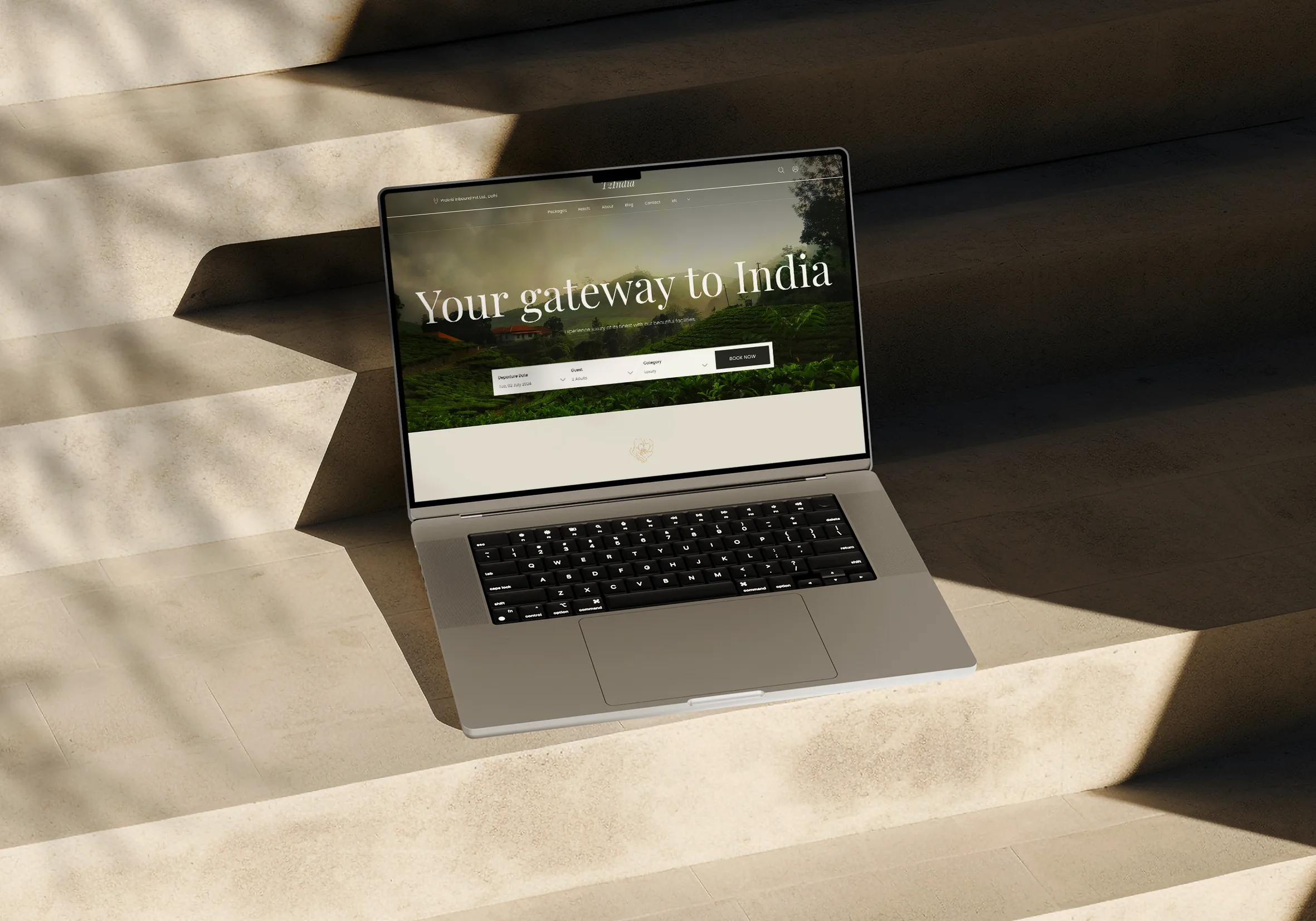
T2India operates one of India's longest-running inbound travel businesses. Three decades of relationships with hotels, drivers, guides, and operators across the country. A portfolio of itineraries covering the UNESCO sites, the luxury trains, the heritage routes, and the regional experiences most international travellers do not know exist. Multilingual operations serving travellers from Europe, the Americas, and East Asia.
The brand was telling a different story. The website read as a booking engine, dense with package codes, drop-down vehicle types, and per-person pricing calculations. The visual identity sat closer to a domestic flight comparison tool than to a heritage travel brand. The depth of expertise inside the company was invisible from the outside. International travellers planning serious India trips were not finding T2India in their consideration set.
The brief that arrived was for a website refresh. The conversation moved quickly to the deeper question. After thirty years of curating India, why was the brand still selling like a booking platform?
Inbound travel to India is a tiered market. At one end sit the high-volume booking platforms selling packaged trips by price and date. At the other sit the curated travel brands selling the years of judgement that lie behind every itinerary. T2India had the curation of the second tier. The brand was operating like the first.
A heritage business that operates like a booking platform leaves its biggest asset on the table. The asset is time. Thirty years of choices, mistakes, refinements, relationships, and accumulated knowledge of where things actually work. None of that was visible from the website.
Three things were keeping the brand in the middle.
Heritage was treated as a footer note. The thirty-year history appeared, if at all, as a "Who We Are" link in the footer. Heritage is not a credential to mention. It is the reason to choose.
The visual register read as a database, not a publication. A heritage travel brand competes with editorial publications like Conde Nast Traveller and Travel + Leisure for the imagination of an international traveller. The old website did not.
The expertise was buried, not signalled. The day-by-day itinerary content was excellent. But it lived inside a tab marked "Tour Details" that opened only after the buyer had clicked through a vehicle dropdown and accepted a per-person calculation. The proof of expertise was structurally hidden by the booking flow that surrounded it.
The repositioning moved T2India out of the tour-operator category and into the heritage travel curator category.
Heritage brand repositioning has two well-known failure modes. The first is modernising aggressively, stripping the visual system clean and ending up with a brand that looks contemporary and carries no weight underneath it. The second is preserving everything, treating the heritage as sacred and ending up with a brand that lives in a museum rather than a market.
The work for T2India required a third path: keep the expertise visible, strip away the utility that had been hiding it, and build a system that lets thirty years of knowing India feel like confidence rather than complexity.
That third path sat on a single strategic decision. Tour operators sell India. Heritage travel brands sell the choices already made about how to see it.
The answer the work kept returning to: it looks like a publication, not a platform.
Once that decision was made, the rest of the brand resolved itself. The booking engine retreated from the homepage and into the practical tooling beneath it. The heritage moved from footer to foreground, and the thirty years of accumulated knowing became the brand.
A heritage brand cannot afford to treat its age as a credential. It has to make its age the product. A parallel challenge appeared in the August engagement, where the co-ownership category carried decades of negative association that the brand had to reframe at a tier the category had never reached.
A full brand architecture, ready to operate at the new tier.
Identity Architecture. The visual register moved from booking-engine to publication. The dense data tables, dropdown fields, and calculation grids retreated into the booking interface beneath the brand. Typography shifted to a refined editorial serif. The logo was kept. Three decades of brand equity is not the problem; the surrounding system was.
Voice and Messaging. The package-code, vehicle-dropdown, per-person-calculation language was retired from the front of the site. The new homepage opens with a statement of who T2India serves and what three decades of knowing India makes possible. Each tour now reads as a curated essay rather than a database entry.
Itinerary Architecture. The day-by-day itinerary content moved to the centre of the site. Editorial treatment for each itinerary: lead photography, a curator's note from the team, named guides where relevant, the case for the route. The pricing architecture was deliberately quieter. The number a serious traveller cares about is not on the first screen.
Editorial Authority. The blog moved from a feature flag to a content engine. Pieces are written by named members of the team, by guides operating on the ground. The Heritage section was added: thirty years of the company's own story, told in the same editorial voice.
Within twelve months of relaunch, T2India had stopped showing up in the same comparison set as the budget tour aggregators. The brand began appearing alongside Audley, Black Tomato, and Greaves India. 62% of new package value was being booked at the multi-week or luxury train tier. Average package value rose by 41%. Inquiries from referral sources ran at 3.8× their previous rate.
Geographic spread widened. The brand received bookings from 27 countries post-relaunch, against 11 prior. The traveller mix moved toward Western European and North American travellers commissioning trips of US$8,000 per person and above.
"The work we have always done did not change. What changed is that the travellers we have always done it for can finally find us. Thirty years of expertise was waiting for the brand to catch up."